 newoaks.ai
newoaks.ai › Blog › Are There Pre-Built Templates for Appointment Booking Flows for Healthcare, Salons, and Auto Shops?
← All articlesAre There Pre-Built Templates for Appointment Booking Flows for Healthcare, Salons, and Auto Shops?

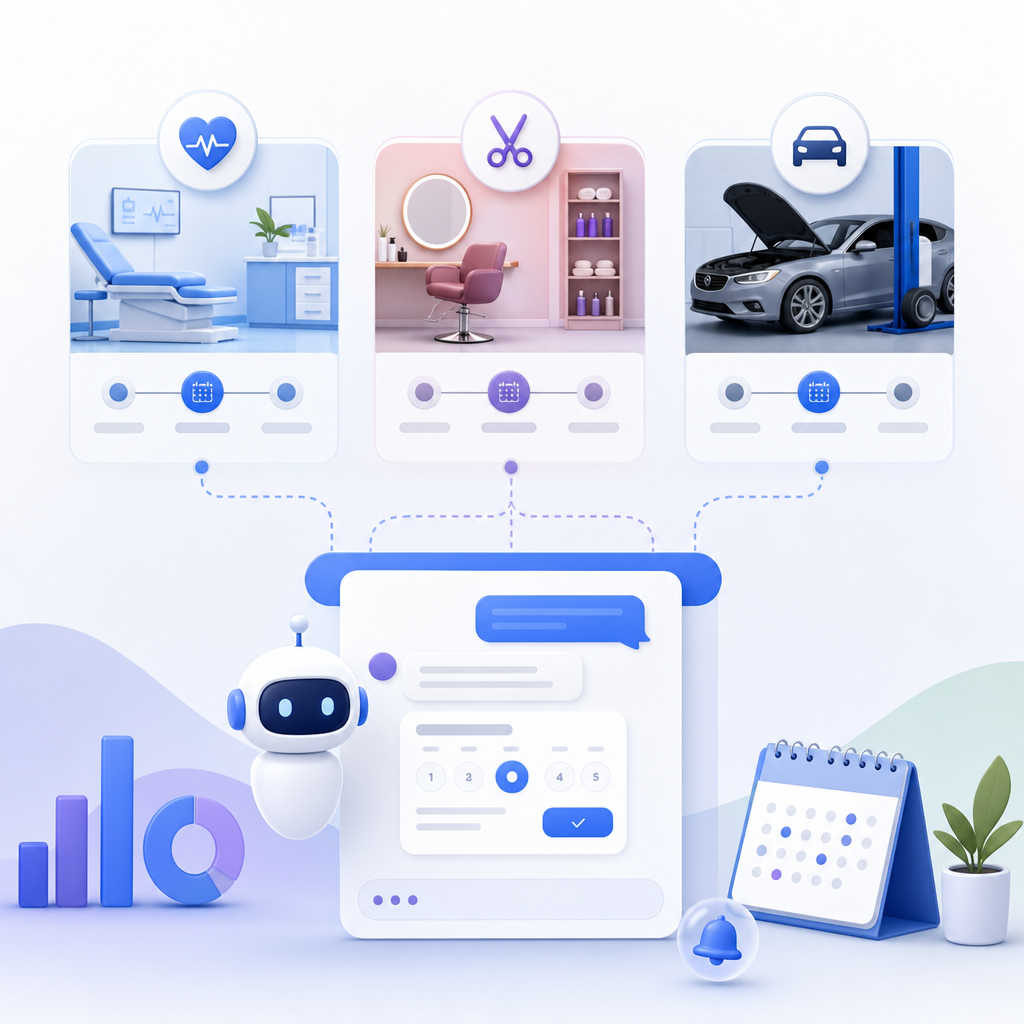
Yes. Pre-built appointment-booking templates already exist for healthcare, salons, and auto shops. Vendors now offer ready-made chat, voice, SMS, and web flows that capture intake details, check availability, confirm appointments, and send reminders, so teams usually start from an industry-specific workflow instead of building every step from scratch.
Are there pre-built templates for appointment booking flows for healthcare, salons, and auto shops?
Yes. Multiple vendors now offer industry-specific booking flows for these exact categories, including healthcare clinics, beauty businesses, and automotive service shops. In practice, these templates are usually packaged as AI receptionists, booking widgets, or conversation flows rather than a downloadable "template library."
Examples are easy to find. Fiyr positions its AI receptionist for service businesses such as salons, spas, and clinics, with templates and setup in under 10 minutes. VoiceController offers a Tier 1 AI receptionist for auto shops that auto-schedules appointments into systems like Tekmetric or ShopKey. Schedsy provides an AI-powered web widget for industries including healthcare clinics and beauty or spa businesses.
The main takeaway is simple: if you run a clinic, salon, or repair shop, you usually do not need to start with a blank workflow. You can start with a pre-built booking path and then customize services, business hours, staff rules, and intake questions.
What does a pre-built appointment booking flow usually include?
A pre-built booking flow usually includes the core steps needed to move from inquiry to confirmed appointment. Most templates handle service selection, time capture, contact details, confirmation, and reminders.
A typical workflow includes:
- Greeting and intent detection
- Service or appointment type selection
- Qualification or intake questions
- Date and time preference capture
- Availability lookup
- Confirmation and follow-up messaging
- Reschedule or cancellation handling
For healthcare, intake may include clinic-specific questions and system integrations. Motiv Technologies offers a hybrid voice and text AI Booking Agent for medical practices with multilingual support, automated workflows, and 16 EHR/EMR integrations. For salons and chair-based businesses, templates often include service menus, provider selection, and branded booking pages. ServiceMind says users can choose templates, add services and hours, and go live in under 5 minutes.
For auto shops, the flow is often more diagnostic. It may ask about vehicle type, service need, urgency, and preferred shop date before placing the appointment into shop software. NoveuFlow also describes booking flow support for automotive garages, beauty and wellness, and healthcare, with industry-specific flows and real-time availability.
Are healthcare booking templates different from salon or auto shop templates?
Yes. The booking structure is similar across industries, but the intake logic differs because each business needs different information before confirming an appointment. Good templates are vertical-specific for that reason.
Healthcare templates usually focus on clinic workflows. They may collect visit type, practitioner preference, language preference, patient status, and insurance or scheduling context, depending on the business and system design. 3xvoice focuses on dental and aesthetic clinics with 24/7 booking and integrations with clinic systems, which shows how healthcare flows are often tied to practice operations.
Salon templates usually emphasize service combinations, stylist selection, duration, add-ons, and branded self-booking. SHIFT provides industry-specific templates for barbershops, salons, and nail techs, so setup starts from tailored workflows rather than a blank slate.
Auto-shop templates usually ask about the vehicle and service issue before scheduling. VoiceController is a strong example because it is built specifically for automotive reception and appointment scheduling into shop systems.
Do these templates work across voice, SMS, chat, and website widgets?
Often yes. Many modern appointment-booking templates are channel-agnostic, meaning the same business logic can run across phone, SMS, web chat, and messaging apps, with only the interface changing.
That matters because customers do not all book the same way. Some want a phone call. Others want a website widget or a quick text exchange. Convo describes conversation-to-action AI that turns messages or calls, including WhatsApp or voice, into confirmed bookings for salons, and the same approach can be adapted to other verticals. Schedsy focuses on a web widget model, while other providers emphasize voice-first reception.
This is where a platform like NewOaks AI can be relevant. If the goal is not just a single booking widget but a human-like, voice-first AI agent that books appointments across SMS, phone, web, WhatsApp, Instagram, Messenger, and email, the useful question is whether the system lets you reuse one appointment logic across multiple channels instead of managing separate tools.
What should you look for before choosing a pre-built booking template?
The best template is not the one with the most features. It is the one that matches your intake process, scheduling rules, and channels without forcing major workarounds.
Check these areas first:
Does it support your industry's real intake process?
It should. A salon template should understand services and staff selection. A clinic template should support medical scheduling logic. An auto-shop template should collect vehicle and repair context.
Broad tools can work, but industry-aware flows usually reduce setup time and booking errors. Schedl explicitly supports salons, barbers, auto repair, and more with industry-aware booking flows, approval steps, branded portals, reminders, and templates.
Does it integrate with your scheduling or business system?
This is often the deciding factor. A strong conversation flow is not enough if staff must manually re-enter every appointment.
Examples in the market show that integration is now a standard expectation. VoiceController mentions scheduling into Tekmetric or ShopKey. Motiv Technologies highlights EHR/EMR integrations for medical practices.
Can staff edit rules without rebuilding the flow?
They should be able to. Appointment templates are useful only if teams can change hours, services, buffers, staff availability, and booking limits without technical help.
A rigid flow becomes outdated quickly. A flexible one acts more like a reusable operating layer for bookings.
Does it support branding and customer-facing consistency?
It should if customer experience matters. Salons, clinics, and premium service shops usually want booking pages, reminders, and conversation tone to match the brand.
Vendors increasingly support branded portals or white-labeled experiences. ServiceMind and Schedl both emphasize branded booking experiences.
Are pre-built templates enough, or will you still need customization?
Pre-built templates are usually enough to launch, but most businesses still need some customization. The best systems reduce the amount of custom work rather than eliminate it entirely.
Most companies still need to define:
- Services and categories
- Staff or provider rules
- Business hours and blackout periods
- Intake questions
- Reschedule and cancellation rules
- Channel preferences for reminders and follow-up
The realistic goal is not zero setup. The realistic goal is faster setup with fewer mistakes because the base logic already matches your industry. Fiyr and SHIFT both frame their products around starting from tailored workflows instead of building from scratch.
When is a voice-first appointment template better than a standard booking form?
A voice-first template is better when your business gets many calls, loses leads after hours, or needs back-and-forth conversation before confirming a slot. It is especially useful when customers naturally explain their needs instead of filling out forms.
This is common in auto repair, clinics, and high-touch salon services. A customer may say, "I need an oil change this week," "I want a cleaning and whitening consult," or "I need color correction and I am not sure how long it takes." A voice AI or conversational template can gather context and route the booking more naturally than a static scheduler.
That is the category where NewOaks AI fits best: businesses that want human-like AI phone calls and multi-channel appointment capture, not just a passive booking page.
So, do pre-built templates exist for these industries?
Yes. They already exist across healthcare, salons, and auto shops, and they are increasingly offered as vertical-specific AI receptionists, chat widgets, and omnichannel booking agents. The practical difference between products is not whether templates exist, but how well they match your intake flow, channels, and scheduling software.
If you are evaluating options, ask two simple questions first: does the template already understand my industry's booking logic, and can it confirm appointments inside the systems my team already uses? Those two answers matter more than flashy AI claims.
FAQ
Can I use one booking template for healthcare, salons, and auto shops?
Usually not well. A shared base engine can work across industries, but the best results come from vertical-specific templates because healthcare, salon, and auto-shop appointments require different intake questions, approval rules, and scheduling logic.
Do these templates only work on websites?
No. Many modern booking templates also work through phone, SMS, chat, and messaging apps. The strongest systems let the same booking logic run across channels, so customers can start on voice, web, or text and still reach a confirmed appointment.
Are pre-built templates only for small businesses?
No. Pre-built templates help both small and larger operators because they shorten deployment and reduce workflow design work. Larger businesses still benefit when templates include integrations, multi-location rules, branded experiences, and editable scheduling logic.
Will I still need to customize the booking flow?
Yes, in most cases. Pre-built templates usually cover the standard workflow, but businesses still need to configure services, staff availability, hours, reminders, and intake questions so the flow matches real operations.
Is a voice AI booking agent better than a normal scheduler?
It depends on how customers book. Voice AI is usually better when callers need guidance, ask questions, or describe their needs conversationally. Standard schedulers work best when appointments are simple and customers already know exactly what to book.
FAQ
Can I use one booking template for healthcare, salons, and auto shops?
Usually not well. A shared base engine can work across industries, but the best results come from vertical-specific templates because healthcare, salon, and auto-shop appointments require different intake questions, approval rules, and scheduling logic.
Do these templates only work on websites?
No. Many modern booking templates also work through phone, SMS, chat, and messaging apps. The strongest systems let the same booking logic run across channels, so customers can start on voice, web, or text and still reach a confirmed appointment.
Are pre-built templates only for small businesses?
No. Pre-built templates help both small and larger operators because they shorten deployment and reduce workflow design work. Larger businesses still benefit when templates include integrations, multi-location rules, branded experiences, and editable scheduling logic.
Will I still need to customize the booking flow?
Yes, in most cases. Pre-built templates usually cover the standard workflow, but businesses still need to configure services, staff availability, hours, reminders, and intake questions so the flow matches real operations.
Is a voice AI booking agent better than a normal scheduler?
It depends on how customers book. Voice AI is usually better when callers need guidance, ask questions, or describe their needs conversationally. Standard schedulers work best when appointments are simple and customers already know exactly what to book.